Table of Contents
- Ford Bronco 4-Door vs 2-Door: Complete Comparison Guide for Hattiesburg Buyers
- Size & Dimensions: More Than Just Doors
- Turning Radius & Maneuverability
- Off-Road Capability: Breakover Angle
- Seating & Passenger Space
- Standard Cargo Space: The Biggest Difference
- Which Ford Bronco Configuration Is Right for You?
Ford Bronco 4-Door vs 2-Door: Complete Comparison Guide for Hattiesburg Buyers
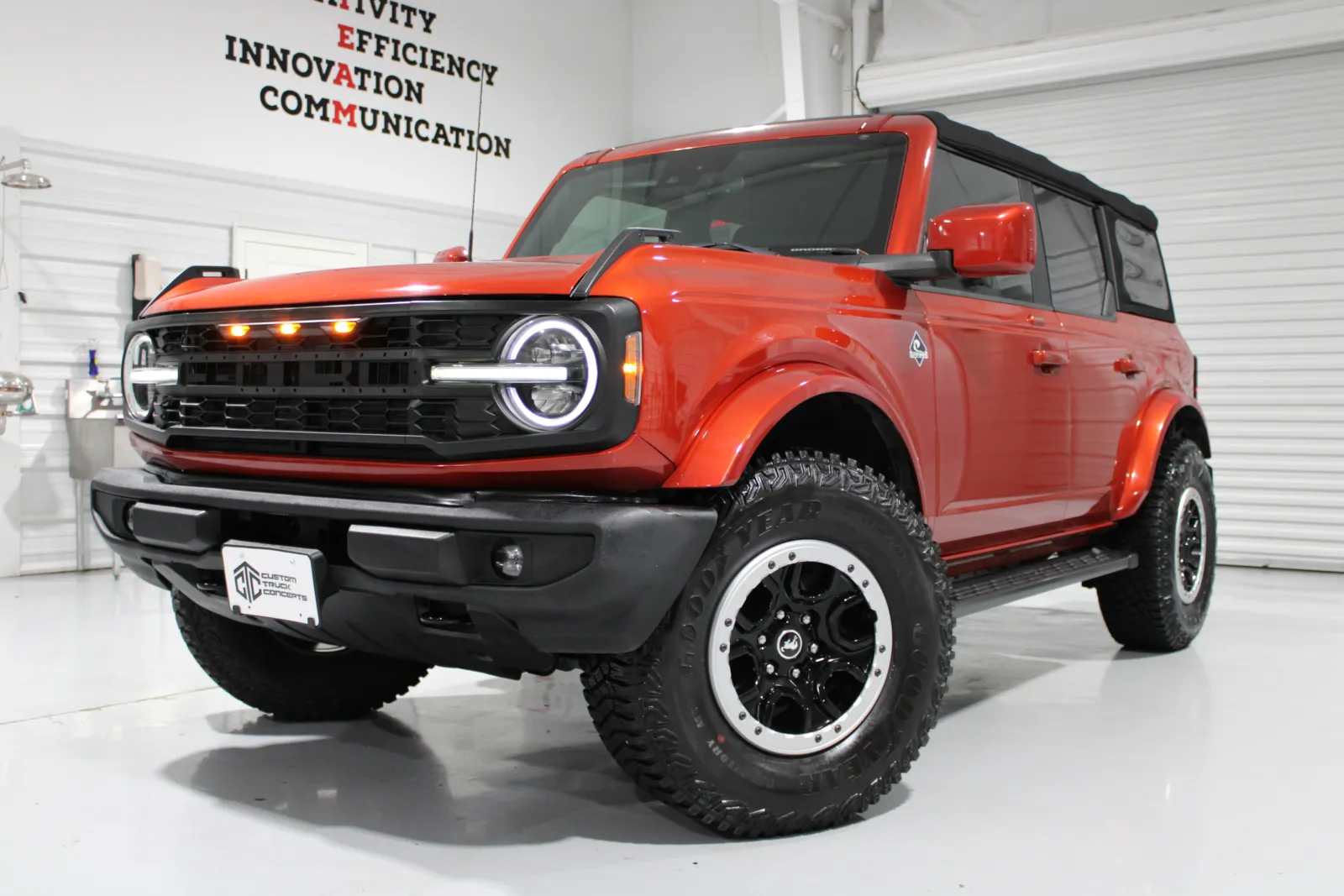
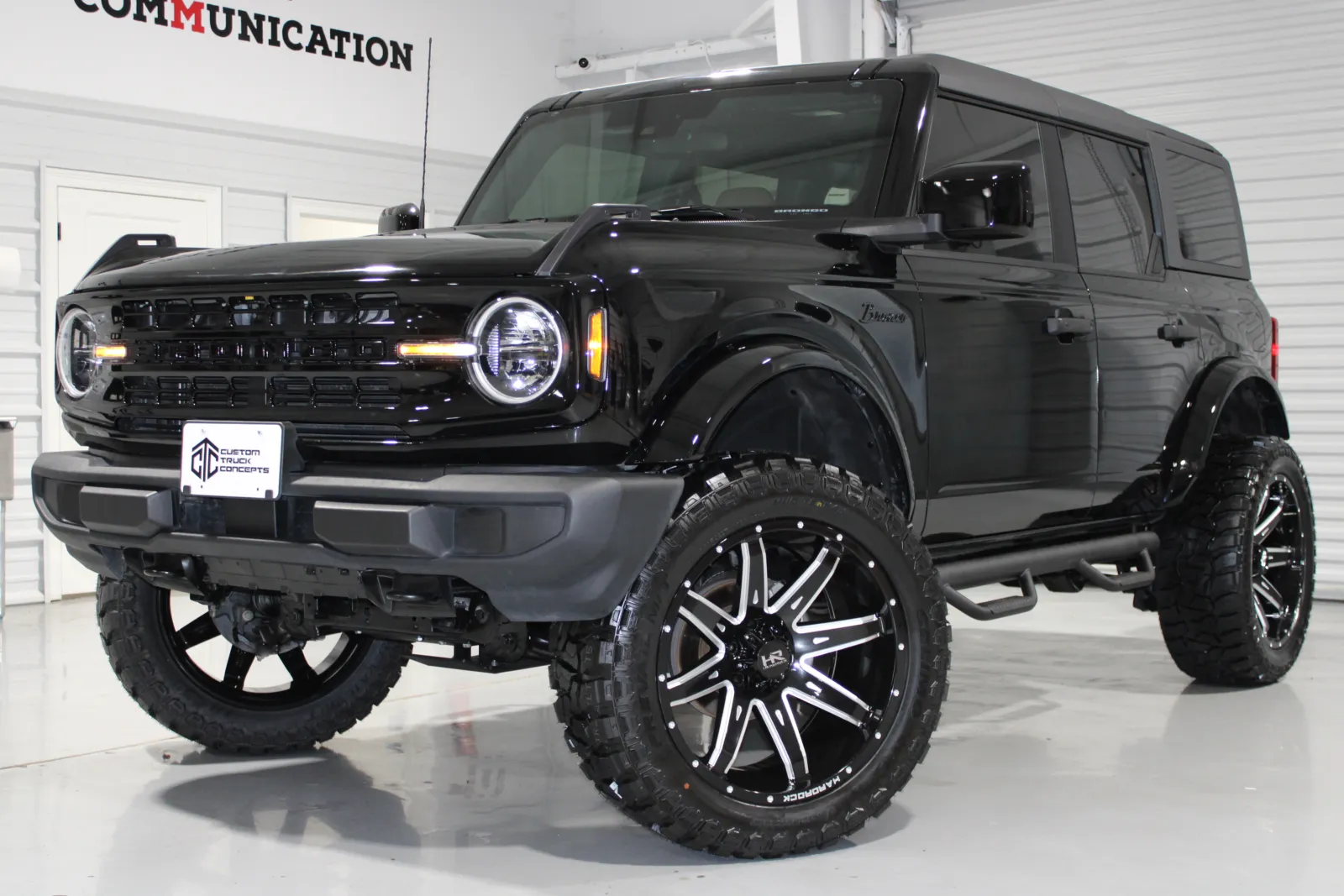
Choosing between the Ford Bronco 4-door and 2-door isn't just about how many doors you want, it's about how you'll use your Bronco. At Custom Truck Concepts in Hattiesburg, Mississippi, we help customers weigh the differences in cargo space, seating capacity, maneuverability, and off-road performance to find the perfect fit. Whether you're navigating tight trails solo or hauling gear and family across Mississippi, this guide breaks down everything you need to know to make the right choice for your lifestyle.

Size & Dimensions: More Than Just Doors
The biggest difference between the 2-door and 4-door Bronco is wheelbase and overall length, and that affects everything from turning radius to ride comfort.
2-Door Bronco
Wheelbase: 100.4 inches
Overall Length: 173.7 inches
Width: 75.9 inches
Height: ~73 inches
4-Door Bronco
Wheelbase: 116.1 inches
Overall Length: 189.4 inches
Width: 76.3 inches
Height: ~73 inches
The 15.7-inch longer wheelbase on the 4-door Bronco translates to nearly 16 inches more overall length. That extra space creates more interior room and cargo capacity, but it also affects how the vehicle handles in tight spaces.
Turning Radius & Maneuverability
2-Door Bronco: ~10.83 meters (35.5 feet) curb-to-curb turning radius
4-Door Bronco: ~12.13 meters (39.8 feet) curb-to-curb turning radius
The 2-door and 4-door Broncos handle turning differently, each suited to distinct driving scenarios. The 2-door's more compact footprint delivers tighter maneuverability, giving it an advantage when navigating confined spaces like downtown parking lots, narrow city streets, and tight trail switchbacks. Its smaller turning circle also makes quick directional changes easier on two-lane roads and forest service roads. The 4-door, while requiring a slightly wider turn, provides a more planted, stable feel during directional changes and excels when traversing broader trails and open terrain. Both models maintain excellent off-road capability, but your preference depends on whether you frequently encounter tight, technical sections that demand nimble handling or prefer the confidence and stability of a wider stance.
Off-Road Capability: Breakover Angle
Both configurations share the same off-road DNA, but their different wheelbases affect how they handle trails.
2-Door Bronco: 29-degree breakover angle (the angle between front and rear wheels when cresting an obstacle)
4-Door Bronco: 24.8-degree breakover angle
The 2-door's shorter wheelbase gives it a significant advantage when climbing over rocks, cresting ridges, or navigating V-shaped ditches. The 4-door's longer body can "belly out" (scrape the undercarriage) more easily in extreme terrain.
Seating & Passenger Space
- 2-Door Bronco: Seats 4 passengers (front bucket seats + 50/50 split rear bench)
- 4-Door Bronco: Seats 5 passengers (front bucket seats + 60/40 split rear bench)
2-Door Bronco
Front Legroom: 43.1 inches
Rear Legroom: 35.7 inches
Front Headroom: 41.0 inches
Rear Headroom 39.8 inches
4-Door Bronco
Front Legroom: 43.1 inches
Rear Legroom: 36.3 inches
Front Headroom: 40.8 inches
Rear Headroom: 40.1-41.1 inches
The 4-door adds one more rear seat position, which makes a big difference for families or groups heading out on adventures together.
Standard Cargo Space: The Biggest Difference
The cargo capacity is where these two models diverge most significantly, and it's often the deciding factor for buyers. The 4-door Bronco provides noticeably more behind-seat storage for everyday items, making it more practical for regular hauling needs. When you fold down the rear seats, the difference becomes even more dramatic—the 4-door opens up substantially more space for larger loads and gear. The 2-door, while more compact, still delivers respectable cargo versatility when seats are folded, making it suitable for weekend adventures and typical outdoor activities. Both models maintain comfortable passenger volume with all seats in use, though the 4-door edges ahead slightly. Your choice ultimately depends on whether you prioritize maximum cargo flexibility and family hauling capability or prefer the nimble, compact nature of the 2-door configuration.
2-Door Bronco
Behind Rear Seats: 22.4 cubic feet
Rear Seats Folded: 52.3 cubic feet
TOtal Passenger Volume: 99 cubic feet
4-Door Bronco
Behind Rear Seats: 35.6-38.3 cubic feet
Rear Seats Folded: 77.6-83 cubic feet
Total Passenger Volume: 103.7-108.2 cubic feet
Which Ford Bronco Configuration Is Right for You?
Choose the 2-Door Bronco if:
✓ You're typically solo or with just one passenger
✓ Tight trail maneuverability is a priority
✓ You prefer a compact, agile driving feel
✓ Parking in tight urban spaces matters
✓ You love the classic, iconic 2-door look
✓ You don't need much cargo space (light packing)
✓ Technical rock crawling is your primary off-road focus
✓ You want the most "pure" Bronco experience
Choose the 4-Door Bronco if:
✓ You have a family or regularly carry 3+ passengers
✓ Cargo capacity is important
✓ Highway comfort and stability matter
✓ You take long road trips to trailheads
✓ You want smoother ride quality over rough terrain
✓ You prefer fewer fuel stops (larger tank)
✓ You want access to higher-end trims
✓ You value practicality alongside adventure capability
Ready to Choose Your Next Ford Bronco?
Get Approved for financing, check our Hours and Directions, or Value Your Trade today. Contact us or call us at (601) 602-1996 to speak with our SUV specialists about custom builds and upgrades.